A Word From Our Editors
Editor, InScight, IISER Kolkata
What do a financial crisis, a tangled rope, an infinite sum, and the swirling arms of a galaxy have in common?
Well! At first glance, perhaps very little. Yet each reveals something that science deals with: to question what seems quite obvious,to look beyond what is immediately visible, and to dig deeper into the reason behind things.
And so the tenth issue of InScight takes us across mathematics, statistics, astronomy, and optics, exploring how familiar ideas can lead to unexpectedly profound questions. We begin with a question that matters far beyond the world of economy: how do we measure risk? The risk to estimate potential financial losses. In “The Risk Beyond the Cutoff: Limitations of VaR and the Need for Coherent Measures”, Dr. Suparna Biswas of IISER Tirupati examines VaR (Value at Risk), a traditional tool for estimating potential financial losses. But what happens when the losses extend beyond the threshold that VaR predicts? The article exposes the limitations of this measure in capturing the severity of extreme losses through an illustrative portfolio example. It then introduces coherent risk measures and mathematical principles which can offer a more reliable way of thinking about financial uncertainty.
Following this we dive into the enigmatic world of mathematics, where Bharath Krishna S. of IISER Thiruvananthapuram takes us into the fascinating world of the Riemann zeta function and the subtleties of infinite series.explores the fascinating mathematical expression , unpacking the ideas behind this seemingly paradoxical result. Most importantly, it clarifies that this is not the ordinary sum of the positive integers, but a value obtained through a different mathematical framework.From an infinite series, we move to something we can hold in our hands: a knotted rope. In “Mathematics Behind Knots and Its Fascinating Real-World Applications,” Rama Mishra introduces us to knot theory, where the seemingly simple act of tying a rope opens up a rich mathematical landscape. By representing knots as closed curves in three-dimensional space, mathematicians can study when two knots are genuinely different and develop tools such as knot invariants to distinguish them. But the story does not end with abstract geometry. Knot theory finds applications in understanding DNA and protein structures, and even in the development of quantum computing.
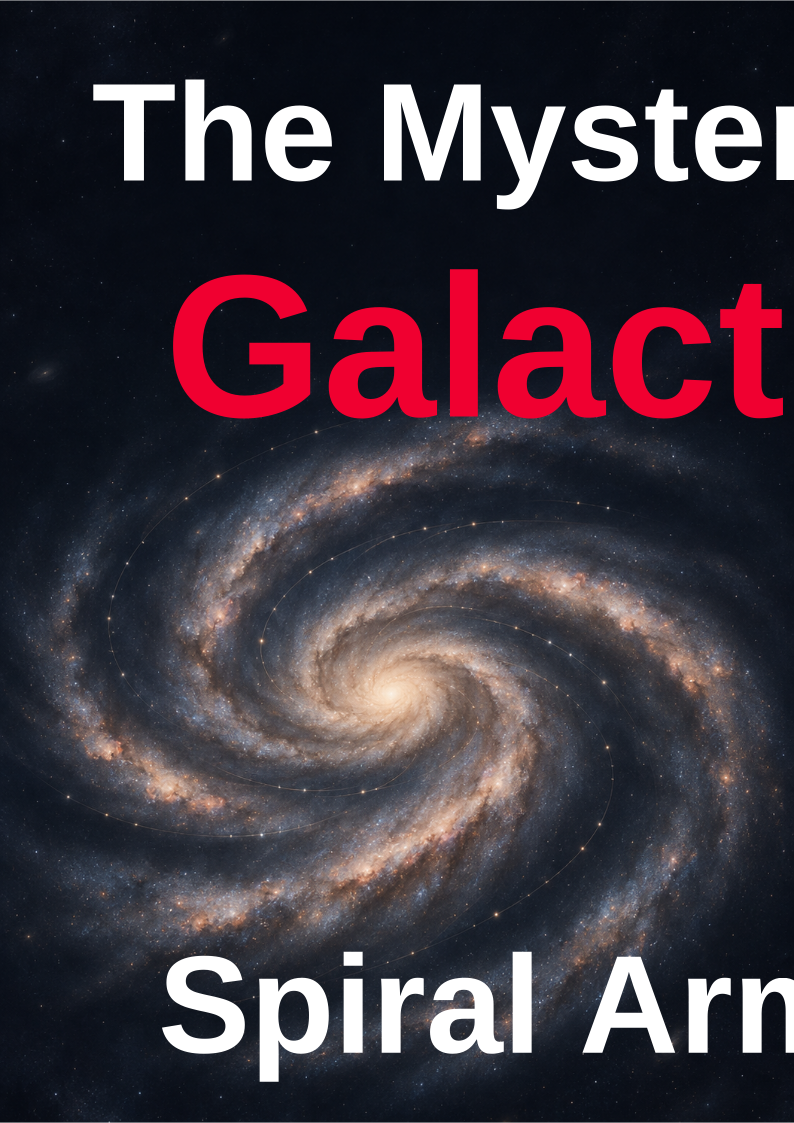
Well! The next article by Dr. Arunima Banerjee from IISER Tirupati leads us to the entire galaxy. She explores a puzzle that used to trouble astronomers: if stars closer to a galaxy’s centre orbit faster than those farther away, why haven’t spiral arms been wound into increasingly tight coils over billions of years? Here, the density-wave theory offers an elegant explanation: spiral arms are not permanent collections of stars, but long-lived regions of enhanced density through which stars and gas continually move. The article brings this idea to life through a common life analogy- a traffic jam, which can persist even if the individual cars enter and leave it.The discussion reaches modern astronomy, where convolutional neural networks are used to classify spiral galaxies as grand-design or flocculent, demonstrating how machine learning can help us make sense of vast astronomical datasets.
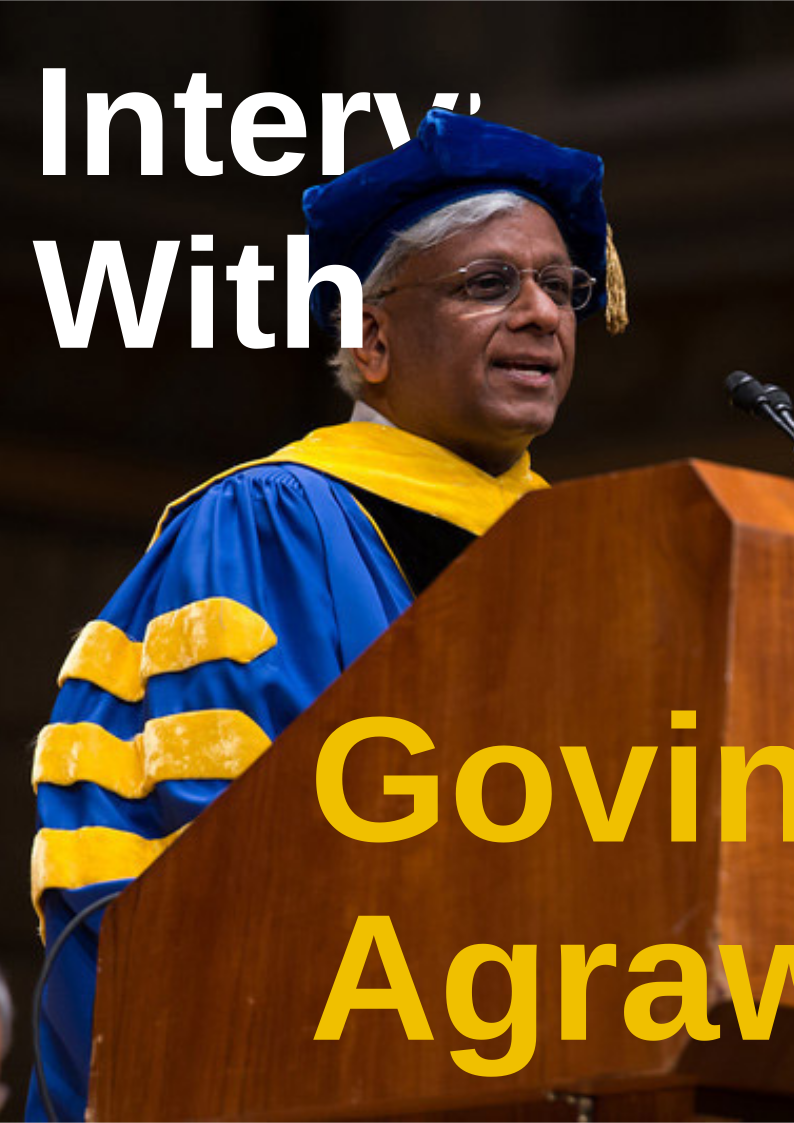
While these articles take us through different scientific ideas,our conversation with Prof. Govind Agarwal offers a glimpse into the people and experiences behind such progress. In this interview he looks back on his journey from his primeval interest in science to his work in nonlinear optics. The writing of the book ‘Nonlinear Fiber Optics’ by Prof. Agarwal reflects on the role of chance, perseverance, and being prepared to seize unexpected opportunities. His experiences also underline the importance of taking initiative, learning from failures, building professional connections, and communicating ideas effectively. His story reminds us that scientific discovery is not only about asking the right questions, but also about remaining open to the paths where those questions may lead us.
Inscight not only delivers long research articles but short summaries of hot press research papers in the ‘Digest’ section of the magazine. In this 10th issue of Inscight we have a summary of a research done on our attention span and how it is affected by our emotional states written by Shriparna Chattopadhyay of IISER Kolkata, followed by Abhirup Mukherjee of IISER Kolkata who wrote regarding ‘entanglement’: a distinguishing feature of quantum mechanics. We also have a section of comics and a quiz to nurture the curiosity in the readers.
The diverse contributions in this issue remind us that science is not confined to any discipline or equation, it is a way of looking at the world with endless curiosity and questions. Whether it is understanding the financial uncertainty, untangling mathematical mysteries, exploring distant galaxies, or learning from the journeys of inspiring scientists, every story offers a new perspective.
We hope this issue of InScight sparks interest in Science, encourages questions, and inspires you to keep exploring. After all, every great discovery begins with a curious mind! Happy reading!